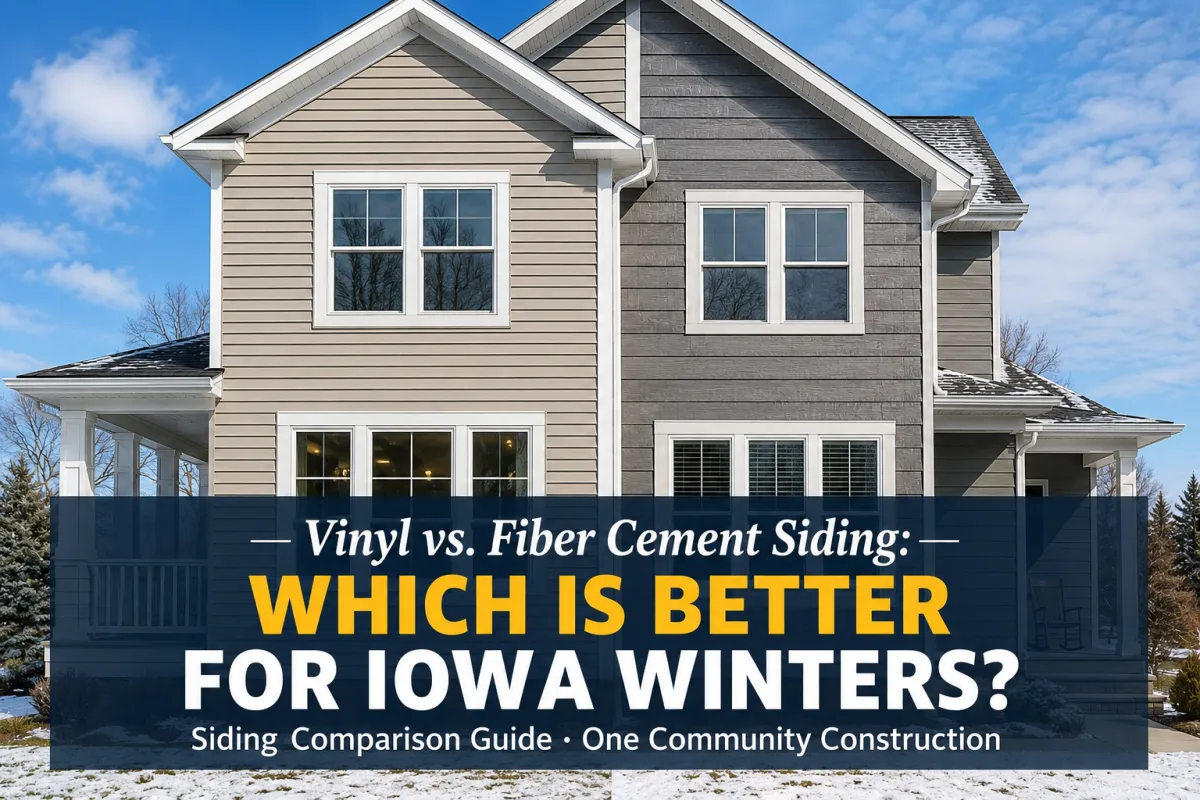
Vinyl vs. Fiber Cement Siding: Which Is Better for Iowa Winters?
If you're planning a siding replacement in Waterloo, Cedar Falls, or anywhere in Northeast Iowa, you've probably already narrowed your choices to two front-runners: vinyl siding and fiber cement siding. Both are durable, low-maintenance alternatives to wood, and both show up on homes across the Cedar Valley. But they behave very differently once Iowa winters arrive — and that difference matters a lot for long-term performance.
This guide breaks down how vinyl and fiber cement siding compare across the factors that actually matter for Iowa homeowners: cold-weather durability, moisture resistance, maintenance demands, appearance, and how each material holds up to the specific conditions of the Cedar Valley climate. By the end, you'll have a clear picture of which choice makes more sense for your home, your neighborhood, and your priorities.
What Iowa's Climate Actually Does to Siding
Before comparing materials, it's worth understanding what Northeast Iowa's climate asks of any exterior cladding. The Cedar Valley sees temperature swings of 100+ degrees between January lows and July highs. That thermal cycling — which can happen dozens of times during a single winter as temperatures bounce above and below freezing — physically stresses every material on your home's exterior.
Add in spring ice storms, summer hailstorms, and the region's above-average humidity from June through August, and you have a test that weeds out shortcuts fast. Materials that perform beautifully in mild climates often show cracks, warping, or moisture damage within a few Iowa winters if they weren't installed with the right protocols.
With that context, here's how vinyl and fiber cement stack up.
Vinyl Siding in Iowa: Strengths and Trade-offs
Vinyl is the most common siding choice in Northeast Iowa, and the reason is straightforward: it's proven, low-maintenance, and handles Iowa weather well when installed correctly.
What vinyl does well in the Cedar Valley:
Vinyl doesn't absorb moisture, which eliminates the rot and mold risk that plagues wood siding in Iowa's humid summers. It holds color for years without repainting — a meaningful advantage when you're trying to minimize exterior maintenance. Modern double-4 and Dutch-lap profiles look clean on ranch homes and two-story Colonials alike. Insulated vinyl adds a layer of continuous R-value that single-story homes in Waterloo and Cedar Falls can genuinely feel on their heating bills.
Where vinyl has limitations in Iowa:
The main knock on vinyl in cold climates is impact resistance. Below about 20°F, vinyl becomes more brittle, and a direct hit from a hailstone or wind-thrown debris at those temperatures can crack a panel in a way that would leave a dent rather than a crack at warmer temps. Iowa hail seasons are real, and homeowners in the Cedar Valley who've had hail claims know that vinyl panels can need targeted replacement after a bad storm.
Vinyl also expands and contracts more than fiber cement as temperatures swing — which is actually fine when it's installed with proper fastening technique (fasteners should never be driven tight), but becomes a problem on DIY or cut-rate installs where panels are locked in place and have nowhere to move.
Fiber Cement Siding in Iowa: Strengths and Trade-offs
Fiber cement — most commonly James Hardie brand, though other manufacturers offer comparable products — has grown steadily in the Cedar Valley as homeowners look for something more impact-resistant and paint-holding than vinyl.
What fiber cement does well in Iowa:
Fiber cement is dimensionally stable. It doesn't expand and contract as dramatically as vinyl through Iowa's temperature swings, and it won't crack in cold weather from impact the way vinyl can. Its paint finishes are baked on at the factory for HardiePlank products, and they hold color significantly longer than field-applied paint on other materials — typically 15 years before you'd want to repaint. Fiber cement is also non-combustible, which matters for homes closer to neighboring structures in Waterloo and Cedar Falls neighborhoods.
Perhaps most importantly for Iowa homeowners: fiber cement stands up to hail better. It won't dent like aluminum and won't crack at cold temperatures like vinyl. If your neighborhood has had hail damage claims in recent years, this is a meaningful real-world advantage.
Where fiber cement has limitations in Iowa:
Installation is more demanding. Fiber cement is heavier than vinyl and requires crews with the right cutting tools, specific fastening patterns, and a moisture barrier installed underneath. Iowa's freeze-thaw cycles make that moisture barrier detail non-negotiable — water that gets behind improperly installed fiber cement will work into the substrate during freeze cycles and accelerate deterioration. Choose a contractor who can walk you through their installation sequence, not just show you a portfolio of finished projects.
Head-to-Head: Iowa-Specific Comparison
Cold-weather impact resistance: Fiber cement wins. It won't crack in sub-20°F temperatures the way vinyl can under impact.
Thermal expansion/contraction: Fiber cement is more stable. Vinyl moves more but performs fine when installed correctly.
Moisture resistance: Both are strong, provided installation is done right. Fiber cement needs a proper moisture barrier; vinyl needs correctly fastened panels that allow movement.
Hail durability: Fiber cement wins for the Cedar Valley's hail exposure.
Maintenance: Both are low. Vinyl never needs painting; fiber cement holds factory paint long-term but will eventually need repainting (far less often than wood).
Appearance versatility: Fiber cement wins on texture authenticity — it mimics wood grain more convincingly. Vinyl has improved significantly and offers a wide range of profiles, but experienced eyes can still tell the difference.
Weight and installation complexity: Vinyl is lighter and faster to install. Fiber cement requires an experienced crew and proper substrate preparation.
Which Is Right for Your Home?
For most Cedar Valley homeowners replacing aging vinyl siding on a ranch or split-level where hail exposure has been manageable, high-quality vinyl remains an excellent, proven choice. It performs well in Iowa's climate when installed correctly, requires minimal long-term maintenance, and is widely available from local contractors who know the material.
For homeowners in areas with documented hail history, homes with architectural details that benefit from a more realistic wood appearance, or those who plan to be in the home for 20+ years and want maximum durability, fiber cement is worth the additional investment. It pays for itself over time in paint longevity, impact resistance, and the premium it commands at resale in the Cedar Falls and Waterloo market.
The honest answer for many homes: either material can be the right call. The bigger variable is often not which material you choose, but whether the contractor installing it knows Iowa's climate and follows manufacturer specifications for cold-weather installation, fastening, and moisture management.
One Community Construction Serves Northeast Iowa
One Community Construction installs vinyl and fiber cement siding across Waterloo, Cedar Falls, Washburn, Waverly, Denver, Evansdale, and the surrounding Cedar Valley. Every siding installation follows manufacturer specifications for cold-weather acclimation, fastening patterns, and moisture barrier requirements — because the material choice only pays off when the installation is done right.
We'll walk you through both options, explain what we recommend for your specific home and neighborhood, and give you a written, no-obligation estimate before any work begins.
Call 319-493-3039 or visit onecommunityconstruction.com to schedule your free siding estimate.